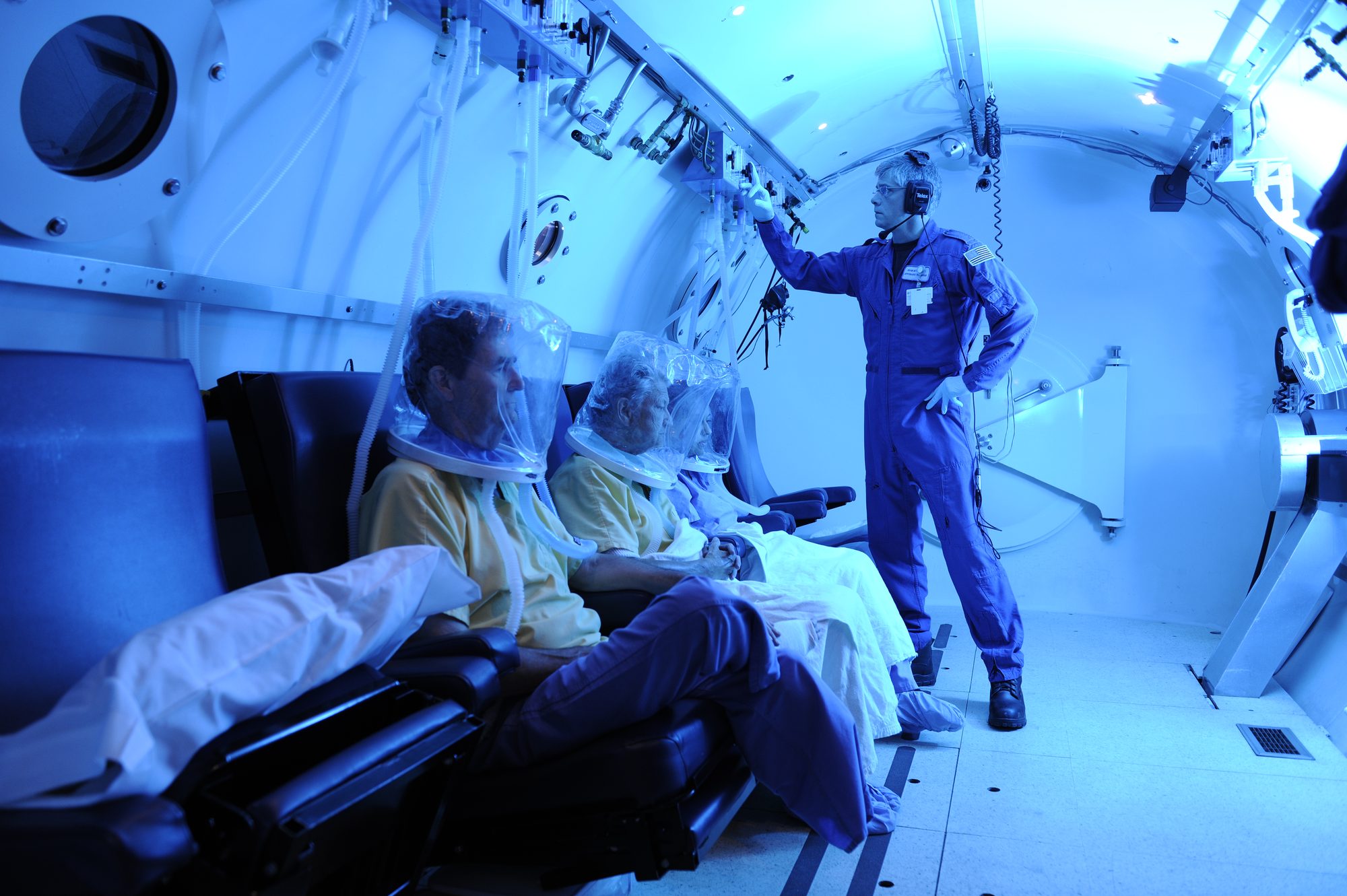
Insomnia is a sleep disorder that can make it difficult to fall asleep, stay asleep, or to have a full night’s sleep. Hyperbaric Oxygen has been investigated as a tool to improve sleep quality in those with insomnia. In a study, researchers found that when they administer oxygen, the subjects’ brains switch out of active sleep, and remain in a deactivated, slow-wave state the entire time. Interestingly, when the demonstrators removed the oxygen, the brain started cycling back through active, or rapid-eye-movement sleep again.
Deactivated or slow wave sleep is the deepest stage of sleep, during which the brain oscillated at a very slow, once-per-second rhythm. This stage is where metabolites are cleared from the brain and proteins re-form. Slow-wave sleep seems to be especially suited to recovery for both the brain and body. Slow-wave sleep also plays a role in memory consolidation.
The research highlights the potential for oxygen for humans in a clinical setting. Hyperbaric oxygen chambers could therefore be used to enhance slow-wave states during sleep to ensure that individuals who may have disrupted sleep are getting enough of the restorative, slow-wave sleep.
Long et al. conducted a study assessing the efficacy of hyperbaric oxygen in alleviating sleep disorders in children with cerebral palsy. A total of 71 children were recruited for the study and divided into two groups based on age. The data concluded that the total sleep items were significantly different pre-HBO and post-HBO and that hyperbaric oxygen is beneficial to improve sleep and safe for children with cerebral palsy.
Interested in this therapy?
Speak to our team to find out how we can help with your specific needs.
Book NowSearch Articles
Categories
Recent Posts
Molecular Hydrogen For Sports
February 5, 2025
Ozone Therapy and Cancer Care
February 5, 2025
Ozone Therapy in Gynaecology
February 5, 2025
From Muscle Gains to Better Skin: The Magic of IV Amino Acids
January 23, 2025
Understanding IBS: Symptoms, Root Causes, and Solutions to Better Gut Health
January 15, 2025